.png)
Moss & Mink
by Alicia Daniel, director of Vermont Master Naturalist

Driftwood logs on the beach of Eagle Bay at Rock Point had grown a coat of mossy fur overnight, a telltale sign of kid’s play. I pictured the children diligently peeling the sheets of moss off the cliff face yesterday and placing the moss down on the logs, carefully connecting the pieces into furry, green pelts. Today the scene was peaceful, even reverent. Nonetheless, Lorna (a Rock Point staff member) and I were there on the 4th of July to undo their playful mischief and put the moss back into place. The moss would dry out and die where it lay on the logs and the cliff looked barren without it.

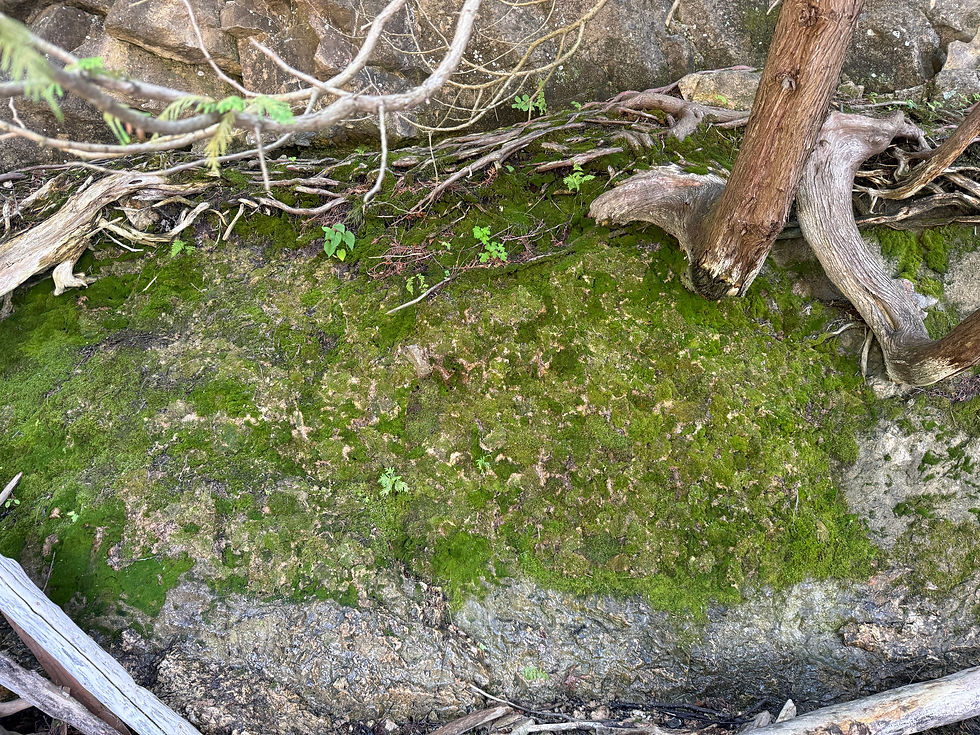
We came with yogurt, a paint brush, a bucket and a little experience from a previous encounter in an adjacent forested park. We found a seep of water trickling out of the bedrock and dripping from the roots of an uphill white cedar. The water flowed down the dolostone cliffs where the moss used to be. We had a natural groundwater irrigation system aiding our restoration efforts. This trickle of groundwater would help keep the moss wet while it regrew. Lorna coated the patches of bare rock where the moss had been stripped with yogurt solution (which we had read was a good source of nutrition and might work like natural glue.) I gathered up the swatches of moss to soak in a bucket of lake water and reattach to the cliff.

The buff colored dolostone was grainy where the moss had been removed. Dolostone typically weathers to a hard, smooth surface when exposed to the elements, but the moss had been breaking it down into fertile soil, rich in calcium from the ancient shells in the rock. Diligently and tenderly, we tucked the harvested moss in among the clumps of moss that remained. The work was painstaking but not without its rewards.

Halfway into our restoration efforts, two mink ran by on a tiny ledge right above our heads. We could have reached out and touched them. They were drawn to our silent labors and stopped to look at us with their bright, curious eyes. They bounced on in fluid grace. Then they stopped, turned and came back to peer down at us again. This happened twice more! I could see their faces close enough to distinguish a small, white patch on the chin of one of them. The white stood out against the glossy, chocolate brown of her coat. “Oh my God!” we both exclaimed when they finally darted off. In addition to the mink, we discovered many ants, beetles and spiders hidden in the moss. We were restoring habitat for them, too. As the moss regrows, these creatures will once again have shelter.
“I bet a moss expert would shake their head at this chaos,” I said looking at the patchwork moss quilt we were creating. Seen up close, each moss patch looked different. Some mosses were growing closer to the rocks and some standing more upright. Some were a brighter green and some darker. We were attaching them in random ways where before there had been a pattern created over thousands of years as different species of moss thrived on these cliffs in the microhabitats that were right for them. We lacked the knowledge and time to place them exactly where they had been, but we felt confident that they would work it out.
It was a beautiful way to spend a morning. We were happy with the results. Kids play; mosses are resilient; and Rock Point is a sanctuary with room for mosses, kids, and mink.

Note: If you visit Eagle Bay, you'll notice the moss is still roped off! It is very delicate at this stage of the restoration process, so please don't touch it. We are watering it every other day and continue to monitor the results. Stay tuned for updates.


Comments